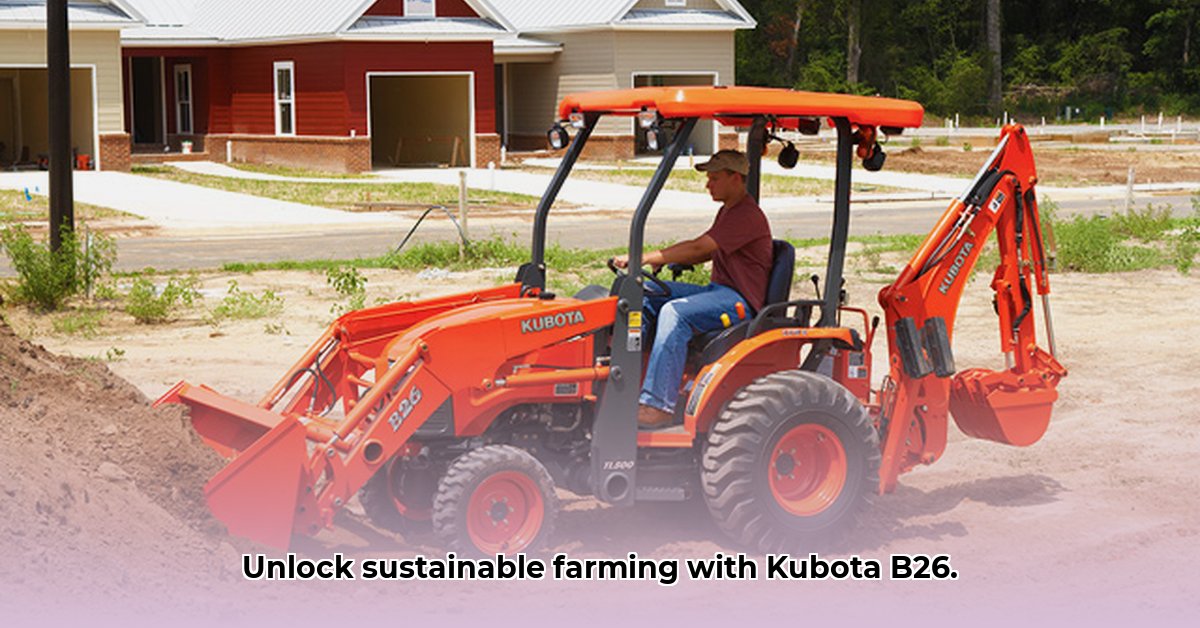
Capabilities and Applications: The B26 in Action
The Kubota B26 is a sub-compact utility tractor (SCUT) designed for maneuverability and versatility on smaller farms and in confined spaces. Its compact size allows for easy navigation around established crops and obstacles, minimizing potential damage. The B26's capabilities extend to a variety of tasks including tilling, mowing, hauling, light trenching, and post hole digging. However, its compact size also means a lower lifting capacity compared to larger tractors. This makes it ideal for specialized tasks on smaller farms but potentially insufficient for large-scale operations requiring heavy lifting. Is the B26's power sufficient for your farm's needs? That's a key consideration before proceeding. For more information on Kubota packages, check out this helpful resource.
Sustainability Considerations: Environmental Impact and Costs
While the Kubota B26's fuel efficiency and emissions data are readily available from the manufacturer, direct comparisons with sustainable alternatives like electric tractors are currently limited by a lack of readily comparable data on smaller electric models. Consequently, a comprehensive assessment of its overall environmental impact requires further research. This highlights a critical need for more transparency and readily available comparative data within the agricultural machinery sector to facilitate informed decision-making on sustainability. The long-term economic viability of the B26 depends on factors such as maintenance costs, parts availability, and fuel prices. Regular preventative maintenance is crucial in minimizing unexpected repair costs and maximizing the tractor's lifespan.
Comparing the B26 to Alternatives: Manual Labor and Larger Tractors
The choice between the Kubota B26, manual labor, and larger tractors depends heavily on the scale and specific needs of your farm. Manual labor, while environmentally benign in terms of fuel consumption, is exceptionally labor-intensive and impractical for larger operations. Larger tractors, while offering increased power, come with higher purchase prices, greater fuel consumption, and reduced maneuverability in constrained spaces. The B26 offers a compromise, balancing power and agility. But is this balance right for your farming operation? A thorough cost-benefit analysis is essential.
A Buyer's Guide for the Kubota B26: Steps to Informed Purchase
Before investing in a Kubota B26, follow these steps:
Assess Your Farming Needs: Honestly evaluate the power requirements, tasks, and terrain conditions on your farm. This assessment will guide your decision on tractor size and capabilities.
Research Pricing and Financing Options: Compare the initial purchase price with the long-term costs, including fuel, maintenance, and potential repairs. Explore available financing options to find the most economically feasible solution.
Consult with Experienced Farmers: Seek advice from other farmers who own the B26 or similar models. Their firsthand experiences provide invaluable insights into the tractor’s performance and challenges.
Test Drive and Engage with Your Dealer: A thorough test drive is essential to evaluate the tractor's handling and performance. Ask the dealer detailed questions regarding maintenance schedules, parts availability, and warranty coverage.
Maintenance and Long-Term Costs: Investing in Longevity
Minimizing long-term costs requires a proactive approach to maintenance. Regular servicing according to the manufacturer's recommendations significantly extends the B26's life and reduces the risk of costly repairs. Access to readily available parts also plays a crucial role in minimizing downtime. Consider proximity to service centers and the potential impact of delays on your farming operations. The long-term economics, therefore, must also factor in the availability of reliable and timely parts.
Is the Kubota B26 Right for You? The Final Verdict
The Kubota B26 represents a viable option for smaller farms prioritizing maneuverability and versatility. Its suitability, however, is closely tied to your specific needs and a comprehensive cost-benefit analysis. Factor in initial purchase cost, ongoing maintenance expenses, fuel consumption, and potential environmental impact. The decision to purchase the B26 should be informed by a detailed assessment of your farm’s unique requirements and context. Responsible farming requires a complete integration of economic and environmental considerations.